“I’ll be happy when” is a lie, and so is “it’s the journey, not the destination.” Field notes on the horizon – a better way to think about the goals we chase in business and in life.
When I left the law firm I founded I did so for the right reason, and still fucked it up. Law practice has this way of burrowing itself into your mind and leaving this little tick tick tick of worry that a client will drop a bomb of work on your desk right before vacation because, well, they always do. So I lived on pins and needles, not mentally present for my wife and daughter.
So I walked away – but it didn’t solve the problem. I knew this business wasn’t the way I wanted to play, but then I started another company … that I played the same way.
The Lies We Tell Ourselves
The second time I spent nine years deluding myself that “I’ll be happy when I sell this business,” and every year there was some excuse why I wasn’t really closer to that goal. The numbers I promised to hit … just rolled over to another year. I was lying to myself. Less badly, this business, but lying nonetheless.
When frustrated, another lie would raise its ugly head, “it’s the journey, not the destination” – as if a Groundhog Day of business goals not reached was a journey worth having. When all along I could have been asking if this was really a life well-lived.
The problem was the two half-right lies.
… “I’ll be happy when I sell Practice Alchemy” was right in that I needed something to head towards (not just away from), but was wrong thinking that happiness was waiting on the other side.
… The “journey” lie was right in that it’s not the sale, but tells us any road will do, and clearly mine sucked.
The horizon isn’t a real place
The horizon is an idea, but it’s one that, had I applied it both times, might have made both a lot better.
We know that the yacht people want a bigger yacht, and the bigger yacht people want the island, and so on. That doesn’t mean we spend our lives in a slowly deflating dinghy, but it tells us that the answer to the question a life well-lived is not, and cannot be, a single goal or a single number.
The horizon we choose, on the other hand, gives us direction to head so we don’t get trapped in a sub-goal of the next thing we think we want. That we don’t confuse today’s goal with the end itself. The horizon tells us that the thing that matters is the direction we’re pointed.
When we look at other important things we do – such as fatherhood, we don’t keep score. You’re never done being a good father, and no single milestone or number can tell you if you’re doing a good job.
In The Time We Spend With the Dying I wrote about the phase-change of my daughter leaving. Take care of a teen’s every need, you’ve traded their self-sufficiency. Send them to live on their own, and you still need to teach them how to manage money. Just because I was a good father yesterday doesn’t mean I get to relax tomorrow, job done. Being a good father is a game that doesn’t end.
So fatherhood is a horizon, and the measure is in how we play, and that we keep playing. It’s the amusing Ginsberg’s Theorem, brought to life:
1. You are playing a game
2. You cannot win the game
3. You cannot break even in the game
4. You cannot quit the game
And once we realize the truth in this humor, the horizon becomes very useful.
I’m not saying that work doesn’t matter and you should walk away. If you’re keen to sell the business, work the sale. I’m saying that the sale isn’t the destination. It won’t carry your happiness.
It’s the “five whys:” Why am I doing this? Take the answer and ask why that, repeat. If you do this really end up at ‘business’ then maybe business itself is your horizon. I didn’t end up there, and I’ll bet you’ll find it was always just a means to an end too. But you might also get an inkling of what your horizon looks like, and what’s just something that we’re mistaking for the end.
Greek legends, French confusion
When I was trapped in the Practice Alchemy doom loop, it was the classic Sisyphus – I’d roll the rock up the hill (land new customers, create new offerings), then inevitably something would sabotage (rogue employee, competitor poaching, whatever). Rock rolls back down hill. Raj pushes it up, because The Magic Business Exit is at the top of the hill, the gods tease, laughing.
At the same time, trapped in loops – work out and diet for months, then inevitably some event (birthday, holiday, whatever) starts me rolling down the hill rolly-polly again.
So we can find ourselves on journeys not worth making, or not playing the game how we want, and thus not a life well-lived.
Perhaps the most famous take on Sisyphus was Camus’ The Myth of Sisyphus, but I think he misses the point. Camus says that we’re put on a hill by the gods – and most people either just give up pushing the rock, or seeking meaning from someone (or something) else. He says we’re put on the hill, so his solution is to accept pushing the rock, and “imagine Sisyphus happy.”
I call bullshit. We don’t need the “it’s the journey, not the destination” postcard in French either.
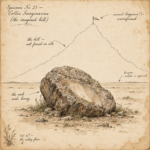
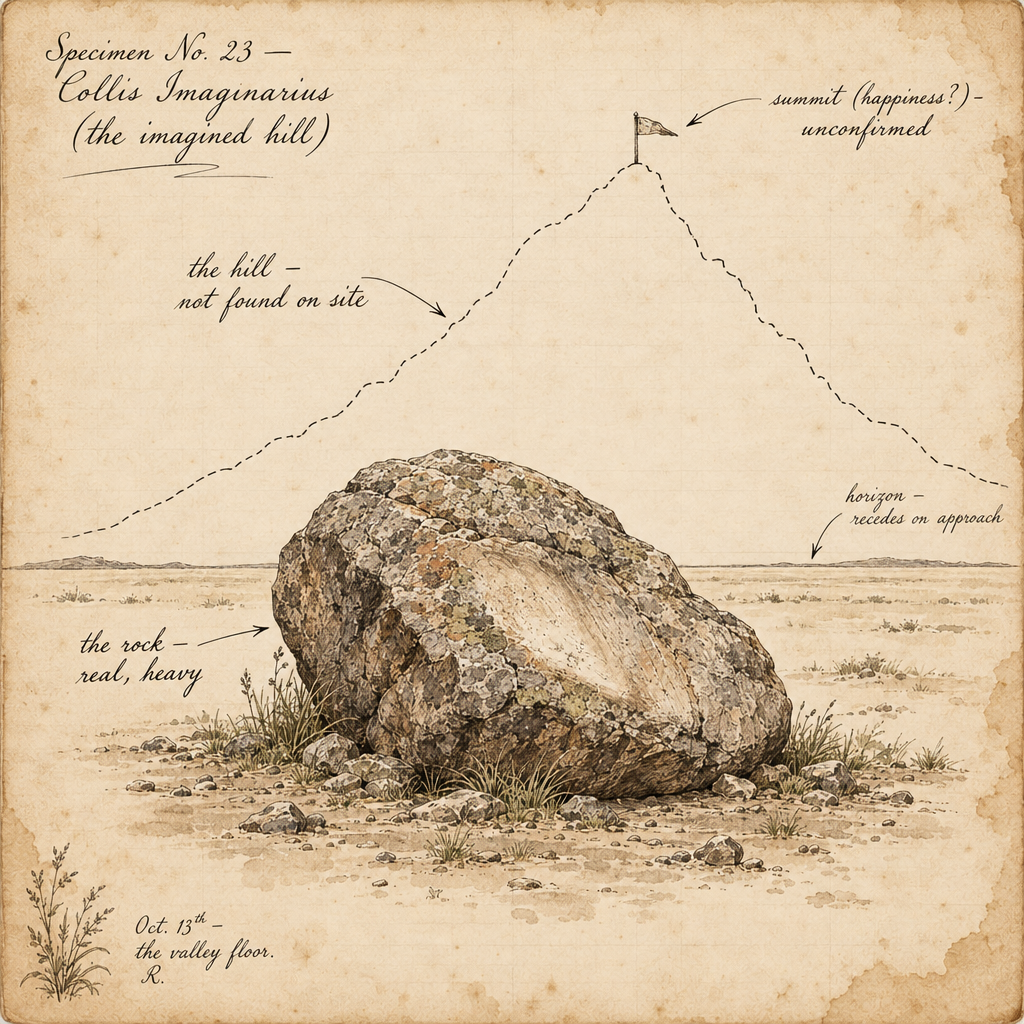
The rock may be real, but the hill isn’t
When I faced a coup at my company, got sued twice or had any number of other fun things happen, it’s real. We take the arrows shot at us from all sides. The rock we roll is real.
But the hill only exists because we put happiness on the top of it, and condition the happiness with getting to the peak. And even if the fates stop fucking with us for long enough to let us get there, we’d just see another peak in the way, because we put it there.
In the gospel of The Matrix,
Boy: Do not try and bend the spoon. That’s impossible. Instead… only try to realize the truth.
Neo: What truth?
Boy: There is no spoon.
Neo: There is no spoon?
Boy: Then you’ll see, that it is not the spoon that bends, it is only yourself
Camus asks us to be happy rolling rocks up hills that aren’t real. We made the hill by putting a goal that can’t be the answer on the top.
But once we dissolve the hill, we’re left with the horizon. And the same way that serves us asking how to be a good father serves for everything else, even work.
This man who started the law firm isn’t the one who started Practice Alchemy, who isn’t the one who sold it. He isn’t the father that sat absentmindedly next to a three-year-old, or dropped her off at college with a clearer view.
Each time another hill dissolves, another comes into view between me and the horizon. And that’s ok. Because as long as I’m not fooled into thinking that it’s real, that there’s something at the top, I can ask what direction I’m headed and how I want to play a game where there is no winning, and no quitting.